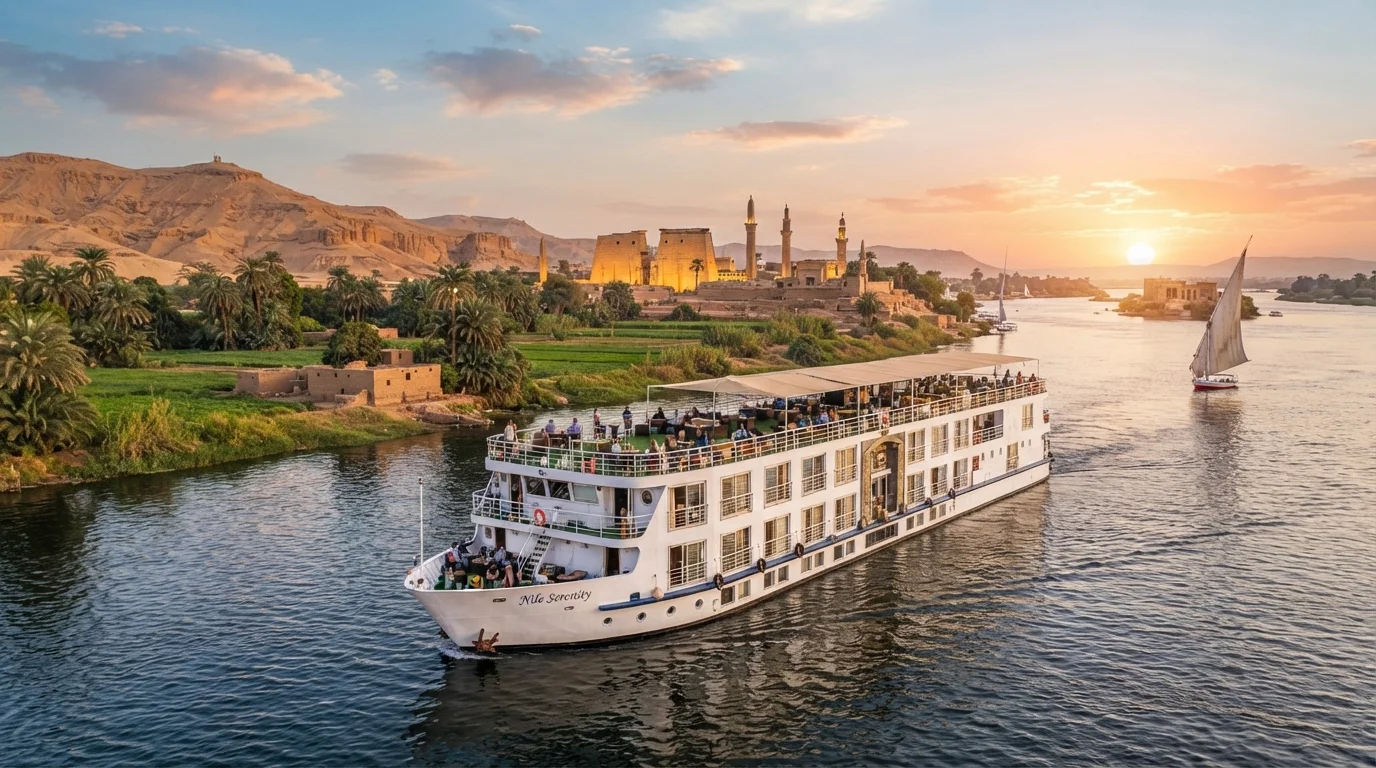
Ninth post in the blog plan and the last P1 topic in the Informational Map. It is the informational companion to the Nile Cruises hub, which targets the commercial plural “Nile cruises Egypt”; this post targets the singular, guide-style “Nile cruise” queries to avoid cannibalization.
A Nile cruise between Luxor and Aswan is one of the classic ways to see Egypt. You unpack once, watch fields, palms and villages slide past from the sun deck, and step ashore at some of the best-preserved temples in the country. It also solves a practical problem: the great sites of Upper Egypt are spread along the river, and the boat carries you between them while you sleep, eat and rest.
This guide explains how a Nile cruise works, the difference between sailing north or south, what you see along the way, what daily life on board looks like and how to choose the right cruise for your trip.
Nile Cruise at a Glance
Most visitors take a standard cruise between Luxor and Aswan. The main choice is direction, which also decides the length.
| Luxor to Aswan | Aswan to Luxor | |
|---|---|---|
| Length | 4 nights / 5 days | 3 nights / 4 days |
| Direction | Upstream, against the current | Downstream, with the current |
| Main stops | Luxor, Esna lock, Edfu, Kom Ombo, Aswan | Aswan, Kom Ombo, Edfu, Esna lock, Luxor |
| Best for | More time on the river and in Luxor | A shorter trip or a tighter schedule |
How a Nile Cruise Works?
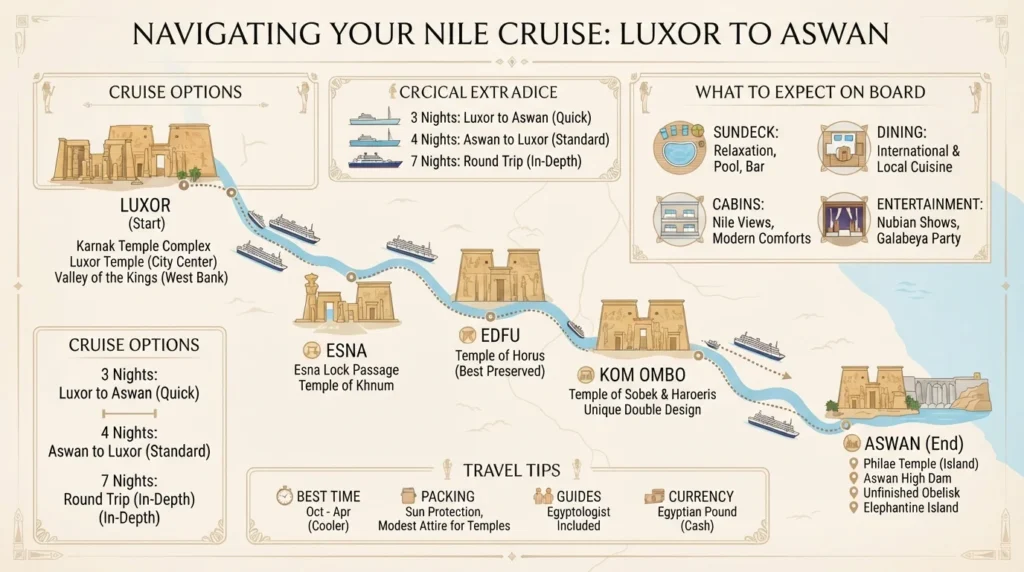
The stretch of river between Luxor and Aswan is the heart of almost every itinerary. Understanding the route helps you choose the right Nile cruise and plan the days before and after it.
Upstream or Downstream?
The Nile flows north, so sailing from Luxor to Aswan means traveling against the current. That is why the upstream Nile cruise usually takes four nights, while the downstream trip from Aswan to Luxor takes three. Both visit the same main temples; the longer version simply gives you more time on board and often more time in Luxor.
What Is Usually Included?
Standard cruises are typically sold on a full-board basis, with meals on the ship, and many include guided visits to the temples along the route. What is included varies from cruise to cruise, so check whether entrance fees, a guide, drinks, transfers and tips are part of the price before you book. Optional excursions, such as Abu Simbel or a hot-air balloon in Luxor, are usually extra.
Longer Sailings
Some itineraries go beyond the standard route. Longer sailings can add Dendera and Abydos north of Luxor, which are less visited and especially rewarding for travelers with a deep interest in ancient Egypt. They take more time, but reveal parts of the Nile Valley that few visitors see. A longer Nile cruise suits people who want the river to be the centre of their trip rather than one part of it.
What You See on a Nile Cruise?
The temples along the river span more than 1,500 years of Egyptian history. These are the main stops on a standard Nile cruise.
Luxor
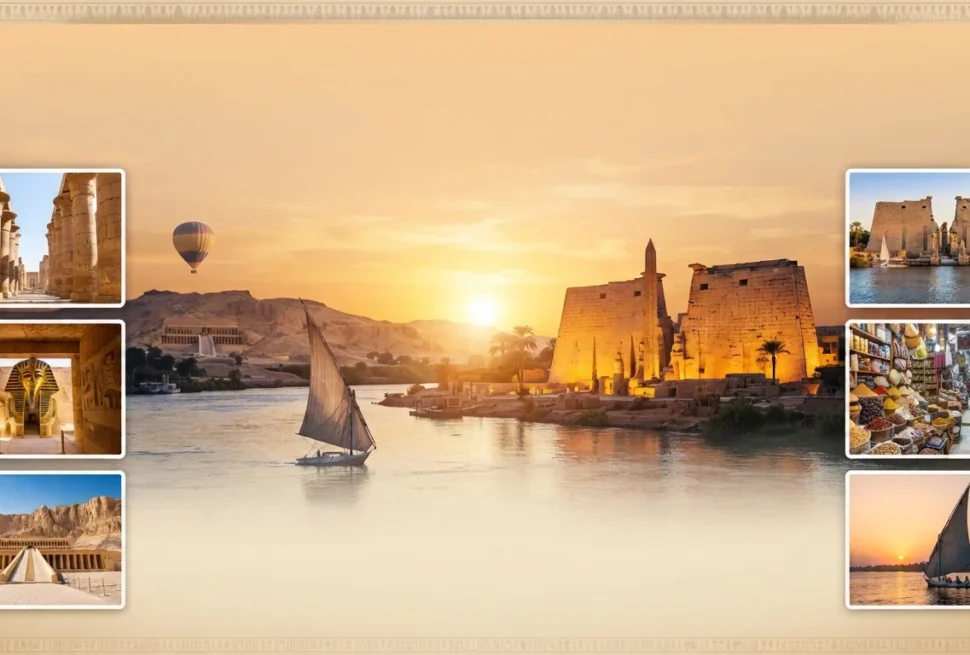
Luxor is the start or end point, and most cruises include its two great temples, Karnak and Luxor Temple, as well as the West Bank with the Valley of the Kings and the Temple of Hatshepsut. Many travelers add a night or two in Luxor to see more; our guide to the best things to do in Luxor covers the options.
The Esna Lock
Between Luxor and Edfu, ships pass through the lock at Esna, which raises or lowers them to the next level of the river. It is a slow, oddly fascinating moment, and vendors in small boats sometimes come alongside to sell textiles to passengers on deck. Depending on traffic, ships may wait their turn, which is a good moment to sit on deck and watch life on the riverbank.
Edfu: The Temple of Horus
The Temple of Horus at Edfu is one of the best-preserved temples in Egypt, with its towering entrance pylon, complete roof sections and detailed reliefs. Built in the Ptolemaic period, it gives a clearer sense of how a complete Egyptian temple looked than almost any other site. It is often the highlight of a Nile cruise for first-time visitors.
Kom Ombo
Kom Ombo is a rare double temple, dedicated to the crocodile god Sobek and the falcon-headed Haroeris. Its riverside setting is beautiful at sunset, and the small crocodile museum next door holds mummified crocodiles found nearby. Visits are often scheduled for late afternoon, so it is one of the most atmospheric stops on any Nile cruise.
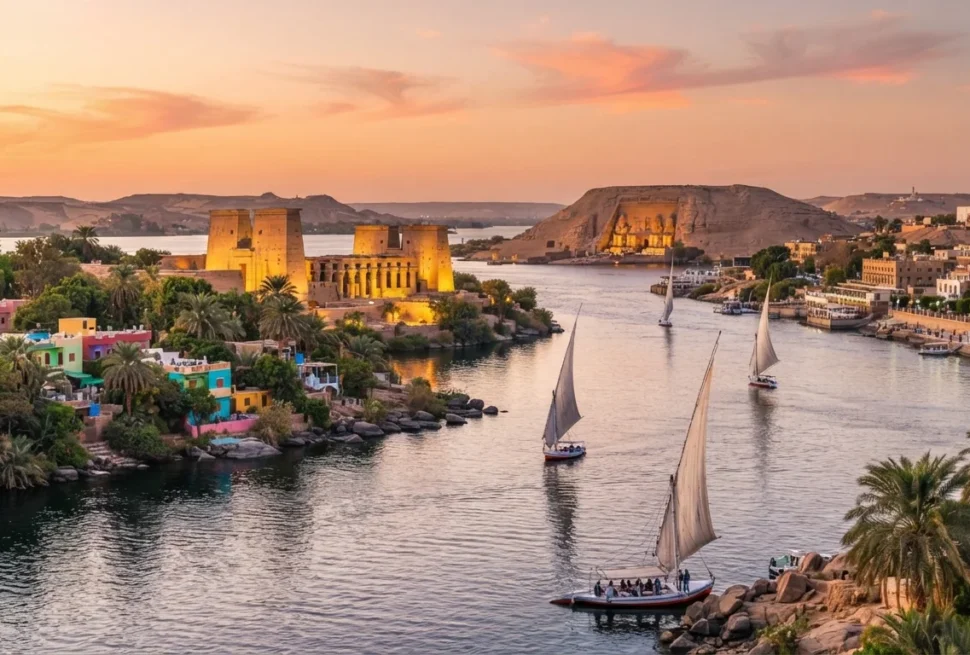
Aswan and Philae
Aswan is the southern start or end point. Cruises usually include Philae Temple, rebuilt on Agilkia Island after the old Aswan Dam threatened it, and often the High Dam and the Unfinished Obelisk. Many travelers also add a felucca ride or a visit to a Nubian village; our guide to the best things to do in Aswan explains them.
Abu Simbel
Abu Simbel is not on the river route between Luxor and Aswan, but it is the most popular optional excursion from Aswan. It means a very early start and a long road journey, or a short flight, so plan it into the Aswan part of your Nile cruise.
Life on Board
A Nile cruise is as much about the time between temples as the temples themselves.
A Typical Day
Days often start early, with temple visits in the cool of the morning. Sailing usually happens in the afternoon, when passengers relax on the sun deck, swim in the pool if the ship has one and watch the riverbanks drift past. Evenings may include a themed dinner or a cultural show, depending on the ship.
Food and Drink
Meals on most cruise ships are served buffet-style, with a mix of Egyptian and international dishes, and the chefs can usually cater for vegetarian diets if told in advance. Drinks are often charged separately, especially alcohol and soft drinks outside mealtimes. Bottled water is essential, so check whether it is provided in your cabin or sold on board.
Cabins and Facilities
Standard cruise ships usually have cabins with river views, a restaurant, a lounge and a sun deck. Facilities, cabin size and service levels vary widely between ships, so read the details of the specific ship rather than relying on general descriptions.
What to Pack?
Pack light, breathable clothing, plus a layer for cool mornings and air-conditioned interiors. Bring comfortable walking shoes for the temples, a hat, sunscreen and sunglasses, and modest clothing for visits to towns and villages. Swimwear is useful if your ship has a pool. A small daypack and a reusable water bottle make shore excursions easier. Binoculars are a pleasant extra for spotting herons, egrets and kingfishers along the riverbanks.
Tipping and Etiquette
Tipping is part of travel culture in Egypt, and on a Nile cruise it usually covers the crew, the guide and drivers. Some cruises include tips in the price, while others collect them at the end; ask in advance so you are not caught out. Dress modestly when going ashore in towns and villages, keep noise down on deck late at night, and be on time for excursions, because the ship’s schedule depends on everyone being back on board.
Choosing the Right Nile Cruise
A few decisions shape the whole experience.
Cruise Ship or Dahabiya?
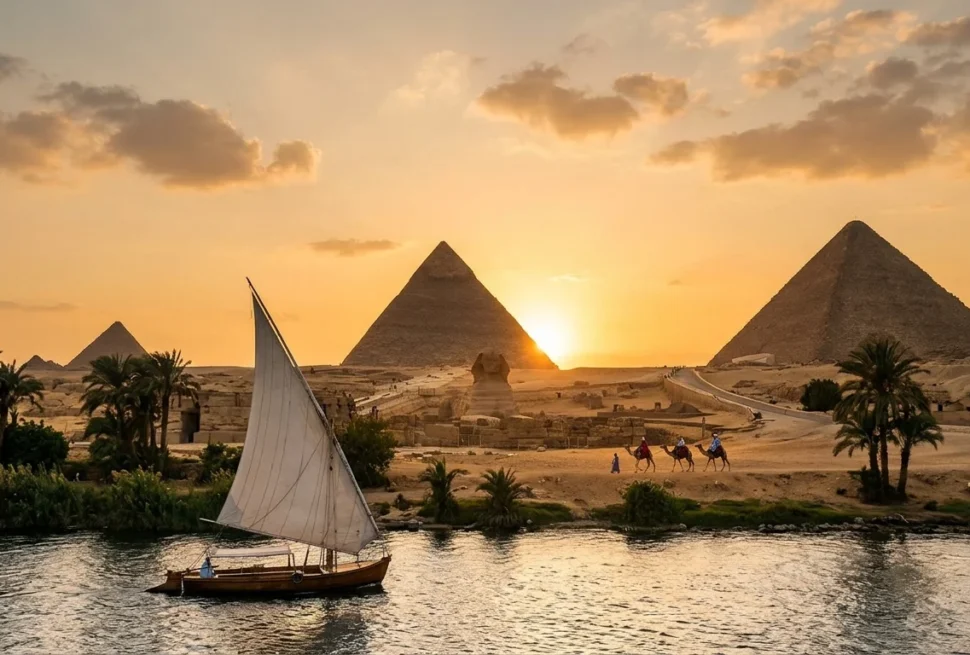
Most travelers sail on a standard cruise ship. A dahabiya is a traditional sailing boat with two masts and just a handful of cabins, typically carrying 8 to 16 passengers. It moves more slowly, often sails between Esna and Aswan, and can stop at smaller sites the big ships pass by. A dahabiya Nile cruise is quieter and more intimate, but usually costs more.
When to Go?
The most comfortable time for a Nile cruise is October to April, when temperatures in Luxor and Aswan are pleasant for walking around temples. Summer cruises operate too and can be good value, but excursions start very early to avoid the heat. Our guide to the best time to visit Egypt covers the months in detail.
How Long Should You Cruise?
For most travelers, the standard three or four nights is enough to see the main temples comfortably. Choose four nights if you want more time in Luxor or simply prefer a slower pace. Choose a longer sailing if you want Dendera and Abydos as well.
Combining a Cruise with Cairo and the Red Sea
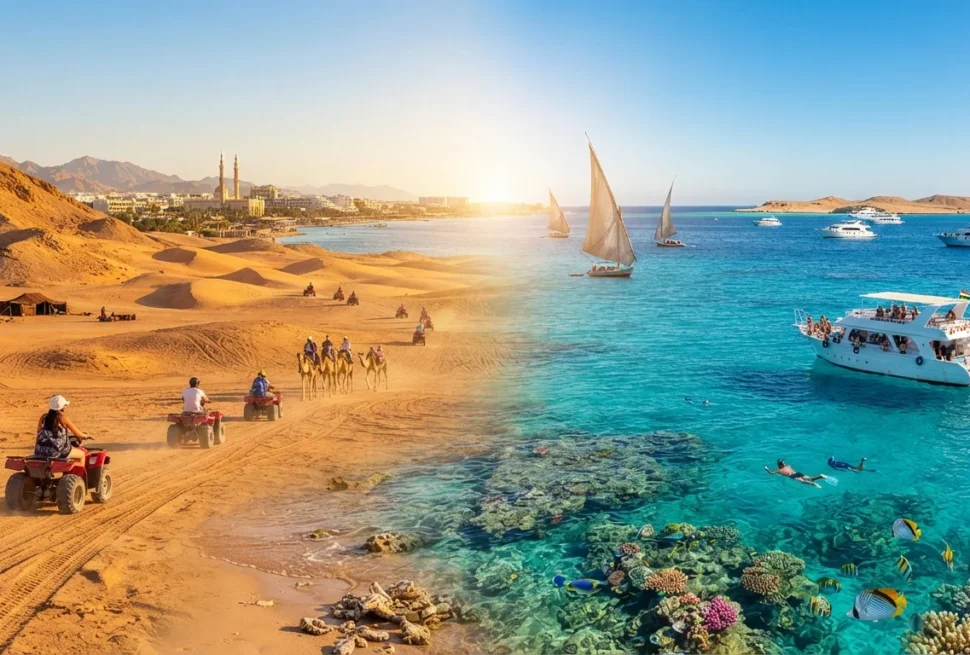
The classic Egypt trip combines two or three days in Cairo with a Nile cruise and, if time allows, a few days on the Red Sea. Hurghada is about four hours by road from Luxor, which makes a beach extension easy at the end of a cruise. Our guide to how many days in Egypt shows how these pieces fit together.
Three Example Cruise Plans
These examples show how different travelers might plan a Nile cruise. They are illustrations, not fixed packages.
A week-long first visit. A couple spends two days in Cairo, flies to Luxor and joins a four-night cruise to Aswan, adding Abu Simbel from Aswan before flying home.
A shorter trip. A traveler with limited time flies into Aswan, joins a three-night downstream Nile cruise to Luxor and spends a final day exploring the West Bank before leaving.
Cruise and beach. A family takes a three-night cruise from Aswan to Luxor, then transfers to Hurghada for a week of snorkeling and island trips. It combines the best of a Nile cruise with a classic Red Sea holiday.
Frequently Asked Questions
A standard cruise between Luxor and Aswan lasts three nights from Aswan to Luxor or four nights from Luxor to Aswan. Longer sailings that add Dendera and Abydos also exist.
Both visit the same main temples. Luxor to Aswan takes four nights and gives you more time; Aswan to Luxor takes three and suits a tighter schedule.
Most standard cruises include accommodation and meals on board, and many include guided temple visits. Entrance fees, drinks, transfers, tips and optional excursions vary, so always check what your specific cruise includes.
October to April is the most comfortable period. Summer cruises run too and can be good value, but excursions start very early to avoid the heat.
Usually not. Abu Simbel lies south of Aswan, away from the standard river route, and is normally offered as an optional excursion by road or by air.
Plan Your Nile Cruise
A Nile cruise turns the long distances of Upper Egypt into part of the experience. Choose your direction and length, decide between a cruise ship and a dahabiya, and plan the days in Luxor and Aswan around it. The rest is the river.
When you are ready, see our Nile cruise options, from three-night sailings to longer cruises with Dendera and Abydos, explore our multi-day Egypt tours, or contact Lovely Egypt Tours to plan your cruise.