Red Sea snorkeling is some of the easiest and most rewarding in the world. Off Hurghada, coral reefs start a short boat ride from the marina, the water is usually calm and clear, and you can float above parrotfish, butterflyfish and giant clams without any diving training. For many visitors, a day in the water becomes the highlight of their Egypt trip.
This guide covers what makes Red Sea snorkeling special, the best spots you can reach from Hurghada, when the water is warmest, how to choose between trips that look similar online, and how to snorkel safely and responsibly.
Red Sea Snorkeling: The Quick Answer
The best way to start is a full-day boat trip to the reefs around the Giftun Islands, which usually includes two or three snorkeling stops, equipment and lunch. If you want more beach time, choose Orange Bay or Mahmya. If you want the chance to see wild dolphins, choose Dolphin House. For non-swimmers, a semi-submarine trip shows the reef without getting wet.
| If you want… | Choose | Why |
|---|---|---|
| The most reef time | Giftun Island snorkeling | Two or three reef stops, short beach break |
| Reef plus a long beach session | Orange Bay | Reef stops, beach time, lunch on board |
| A calm, slow beach day | Mahmya | Sunbeds and lunch on the island |
| A chance to see wild dolphins | Dolphin House | Natural reef where spinner dolphins are often seen |
| Your own schedule | Private speedboat | Quieter reefs, flexible timing |
Why Red Sea Snorkeling Is So Good
The Red Sea is a narrow, warm sea between Africa and Arabia, and its reefs grow close to the surface along much of the coast. That combination puts colorful coral within easy reach of snorkelers.
Remarkable Marine Life
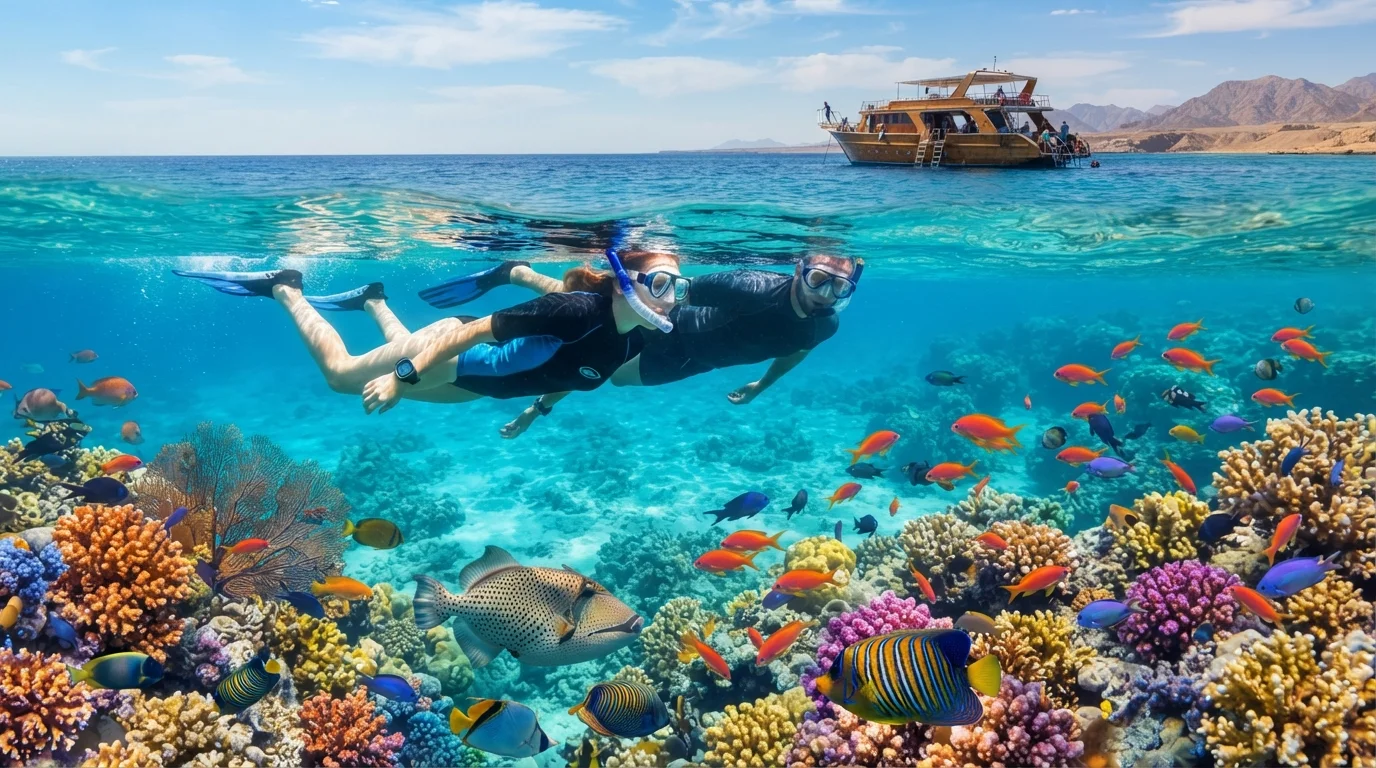
A scientific review of shallow reef fauna recorded more than 1,000 fish species in the Red Sea, with about 13 percent found nowhere else, along with hundreds of coral species, according to a published study of Red Sea endemism. On a typical day of Red Sea snorkeling you might see clownfish in anemones, parrotfish grazing on coral, blue-spotted rays on the sand and, with luck, turtles. Look closer and you will also spot smaller life: Christmas tree worms on coral heads, moray eels peering out of cracks and shoals of tiny damselfish darting through branching coral. A good guide points out species you might otherwise miss, and some boats carry fish identification cards.
Resilient Reefs
The northern Red Sea is known for corals that cope with heat better than many reefs elsewhere. UNESCO notes that reefs at the sea’s northern tip have adapted to marine heatwaves and high salinity over thousands of years, as described on its Aqaba Marine Reserve listing. That resilience is one reason scientists see the northern Red Sea as a possible refuge for corals, and one reason Red Sea snorkeling here is still so rewarding, though local reefs face real pressure and need protection.
Clear, Calm Water
Visibility is often excellent, and many reefs around Hurghada are sheltered from strong currents. That makes Red Sea snorkeling accessible to beginners, families and confident swimmers alike.
The Best Snorkeling Spots from Hurghada
Most Red Sea snorkeling trips from Hurghada leave from the marina and head to protected reefs offshore. Here is how the main options compare.
The Giftun Islands Reefs
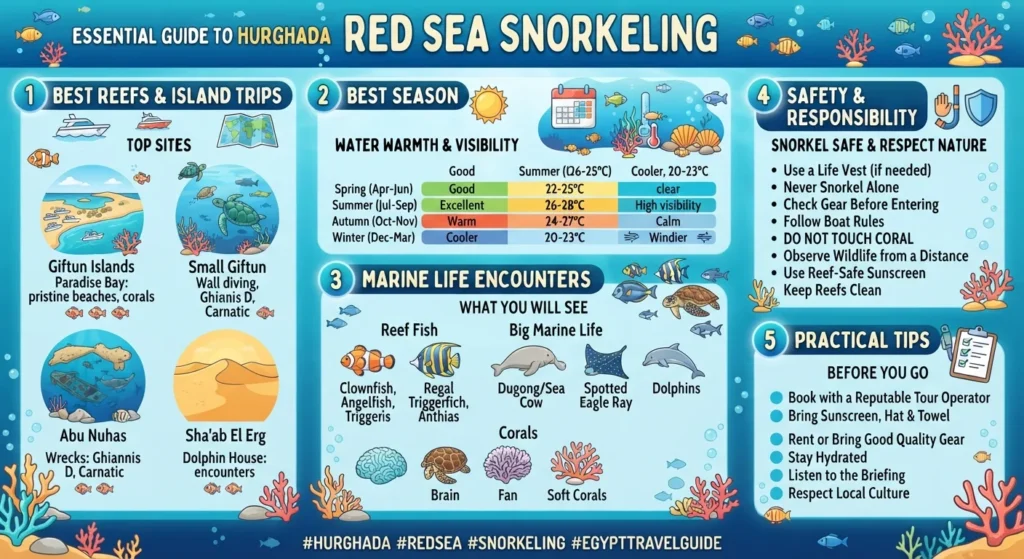
The Giftun Islands, just offshore, form a protected national park with healthy reefs on their sheltered sides. A reef-focused Giftun trip gives you the most time in the water, which makes it the classic introduction to Red Sea snorkeling. Expect a small national park fee, usually paid in cash on the day.
Orange Bay
Orange Bay on Giftun Kebir is famous for its white sand and shallow turquoise lagoon. Trips usually combine one or two reef stops with a long beach session. It is a good balance for couples and groups who want Red Sea snorkeling and time to relax. Shade on the beach is limited, so bring a hat and apply sunscreen before you land.
Mahmya
Mahmya is the calm option, with sunbeds, shade and lunch served on the island. Snorkeling is possible from the shore area, but the focus is on a slow day by the sea rather than several reef stops. It suits travelers who want a little Red Sea snorkeling between long stretches of rest, and families who prefer shallow water near the beach.
Dolphin House
Dolphin House is a horseshoe-shaped reef north of Hurghada where spinner dolphins often rest. Trips combine reef snorkeling with the chance to see them in the wild. Sightings are never guaranteed, and good operators keep swimmers calm, quiet and at a distance. When it works, it is the most memorable form of Red Sea snorkeling there is.
Private Speedboats and Quieter Reefs
A private speedboat lets your group choose quieter reefs, move faster between sites and set its own timing. It is a strong option for families with young children or anyone who wants to avoid the busiest boats. Because the crew works only with your group, it is also one of the most relaxed ways to try Red Sea snorkeling for nervous swimmers.
Your Hotel’s House Reef
Some hotels along the coast have their own reef or jetty. A house reef is a good place to practice and get comfortable before a boat trip, but the reefs offshore are usually richer. Think of it as a warm-up for Red Sea snorkeling rather than the main event.
When to Go: Water Temperature and Conditions?
Red Sea snorkeling is possible all year, but conditions change with the seasons.
Water Temperature by Season
Around Hurghada, the sea is coolest in February, at about 22 °C, and warmest in August, at about 28 °C. From May to November, most people are comfortable without a wetsuit. In winter, a shorty wetsuit makes a long session much more pleasant, and many boats can provide one. Our guide to the best time to visit Egypt has month-by-month detail.
Wind and Sea Conditions
Wind is the biggest factor in day-to-day conditions. Winter days can be breezy, which makes some crossings choppy and can affect where boats stop. Morning departures are often calmer. If a trip is rearranged because of weather, it is for safety and comfort. Calm summer mornings usually offer the clearest, easiest conditions for Red Sea snorkeling.
Choosing a Trip and Snorkeling Safely
A little preparation makes Red Sea snorkeling safer and more enjoyable for everyone.
How to Choose Between Similar Trips?
Island trips can look identical online. Compare how many snorkeling stops are included, how long you spend on the beach, where lunch is served and whether the boat is shared or private. Decide whether you want reef time, beach time or a quieter day, and choose accordingly.
Safety Tips
Always use the life jacket or flotation vest if you are not a strong swimmer, stay with your group and follow the guide’s instructions about where to swim. Check your mask fits before you jump in, and signal the crew if you feel tired or cold. Never snorkel alone.
Getting the Gear Right
A mask that leaks or fogs can spoil a day. Before you leave the boat, press the mask to your face without the strap and breathe in gently through your nose; if it stays in place, it fits. Rinse it with seawater, keep your hair out of the seal, and ask the crew for a different size if needed. Well-fitted fins also make Red Sea snorkeling far less tiring.
Children and Non-Swimmers
Children can enjoy Red Sea snorkeling with a properly fitting life jacket and close supervision; ask whether child-size gear is available. Non-swimmers can still see the reef from a semi-submarine or glass-bottom boat, and some can snorkel with a flotation vest while holding a guide’s ring.
Reef Etiquette
Never touch, stand on or kick the coral, because it is alive and easily damaged. Do not feed fish, chase turtles or try to touch dolphins. Use reef-safe sunscreen and wear a rash vest to reduce the amount you need. Responsible habits keep Red Sea snorkeling good for future visitors.
What to Bring?
Pack swimwear, a towel, reef-safe sunscreen, a hat, sunglasses and a rash vest or T-shirt for sun protection in the water. Bring cash for the park fee and tips. If you have your own well-fitting mask, bring it; snorkeling gear is usually provided on trips.
Combining Snorkeling with Other Trips
Boat days are tiring, so spread them through your week rather than booking them back to back. A desert safari in the evening or a day trip to Luxor works well between days on the water. Mixing activities keeps each Red Sea snorkeling day fresh and gives your skin a break from the sun.
Three Example Snorkeling Plans
These examples show how different travelers might plan their Red Sea snorkeling. They are illustrations, not fixed packages.
First-time snorkelers. A couple spends an afternoon at their hotel’s house reef to get comfortable, then joins a Giftun Island snorkeling trip with two reef stops. It is a gentle introduction to Red Sea snorkeling without pressure.
A family with young children. The family chooses a private speedboat to a calm reef, then spends a separate day at Mahmya with life jackets and shallow water near the beach.
Keen snorkelers. A group books Giftun one day and Dolphin House another, then adds an introductory scuba dive to see the reef from below. For them, Red Sea snorkeling is the main reason for the trip.
Frequently Asked Questions
Yes. Many reefs around Hurghada are calm and close to the surface, and boat crews provide equipment, life jackets and guidance.
For the most reef time, a Giftun Island snorkeling trip is the classic choice. Orange Bay adds a long beach session, and Dolphin House offers the chance to see wild dolphins.
From May to November, most people are comfortable without one. In winter, when the water is around 22–23 °C, a shorty wetsuit makes longer sessions more comfortable.
Some can, with a life jacket and a guide close by. Those who prefer to stay dry can see the reef through the windows of a semi-submarine.
You may, especially on a Dolphin House trip, but wild dolphins are never guaranteed. Respectful distance and quiet behavior give you the best chance.
Plan Your Red Sea Snorkeling Day
The best Red Sea snorkeling combines healthy reefs, calm water and a trip that matches what you want from the day, whether that is maximum reef time, a beach to relax on or the chance to meet wild dolphins. Pick the right trip, follow simple reef etiquette, and the Red Sea will do the rest.
When you are ready, explore our snorkeling and island trips from Hurghada, or contact Lovely Egypt Tours for help choosing the right day on the water.